
Notes from the Road: Olds, AB
Hi there! Olivia here; co-founder of GRCP.
Since the Gravel Road Civics Project (GRCP) was founded in last spring, our team has heard from so many people, here in Alberta and across the country, who immediately picked up what we were putting down; people who see the need for real, community-based investment in civics resources and educational opportunities in rural and small-town areas.
To be totally honest however, a lot of the loudest early support came from non-profit and academic spaces, which makes sense; many of those people see the gap we’re trying to address everyday, whether through community organizing, nonprofit work, or field research across rural Alberta. But, that also means that our loudest supporters already have access to the kinds of civic knowledge and tools we aim to share through our work.
So what we realized pretty early on was that we desperately needed to hear from rural and small-town residents themselves. We knew the project couldn’t be shaped only through conversations with our family members in rural and small-town Alberta; people who know and love us and are, in some ways, naturally inclined to support our goals. Nor could it rely only on our own anecdotes from youth spent drifting in and out of small towns.
We needed to talk to everyday Albertans, especially the ones who don’t know us, to avoid filtering our work through academic or nonprofit-y language we’ve been trained to use. The kind of people who might not describe their experience as a “civics gap,” but who feel something’s missing all the same.
So, when we decided to spend a Saturday in Olds this past month, we were keen to test the waters. Tim’s order in hand, we headed for our first (of many) GRCP road trips! Keep reading for a quick snapshot of what we heard, followed by a bit about what we’re working on next.
Olds: Livestock Auctions and Data Centres
Olds has been on our radar for a couple of months now, as a town that, increasingly, is where conversations around large-scale development and government ambitions meet small-town realities.
First, Olds is at the forefront of some of Alberta and Canada's most far reaching goals. Home to Olds College Agriculture and Technology, a nationally-renowned college that pulls in students from across Alberta and beyond, breakthroughs in sustainable agriculture practices and technological advances (especially in the achievements of their Smart Agriculture research team) consistently position the town as a central player in developing the future of Canada’s largest industry: agriculture and food production. At the same time, the town is in the middle of a pretty big debate over the potential of one of the country’s largest data centres going up in the area, part of both Alberta and Canada's push to turn the country into an AI superpower (with data centres being a key component of the November 2025 Canada-Alberta memorandum of understanding (MOU)).
But beyond these aspects, Olds is still very much a hub for farmers, ranchers, and producers in Alberta’s heartland. The town hosts weekly livestock and equipment auctions, frequent community and professional rodeos, and country fairs and events; the kind of events where you see the same faces year after year and where a deep love for the pace and familiarity of rural and small-town life is shared.
All in all, it seems fair enough to say that Olds is a place where big conversations about the future are happening right alongside everyday rural life. To say we were excited to hear what was most top of mind for residents is an understatement!
Saturday Morning in Olds
We started the morning the way many people in Olds do: over breakfast at Smitty’s. By the time we arrived at 7:30 AM, it was already buzzing. Families queued for the buffet, regulars lingered over coffee, and the sound of conversation drifted peacefully between tables. Across from us, a lively group of veterinary technician students from the college was convening before a long day of evaluations, as they later told us.
One of the unexpected gifts of doing this work together with my co-founder and best friend Alex is the in-between moments. Over breakfast, we had space to catch up and reflect. What were we really hoping to hear this weekend? Were we planning on asking similar questions? Somewhere between the bigger questions, we inevitably got into the more ordinary kind: do you think winter is actually done this time? It was 10 degrees that day!
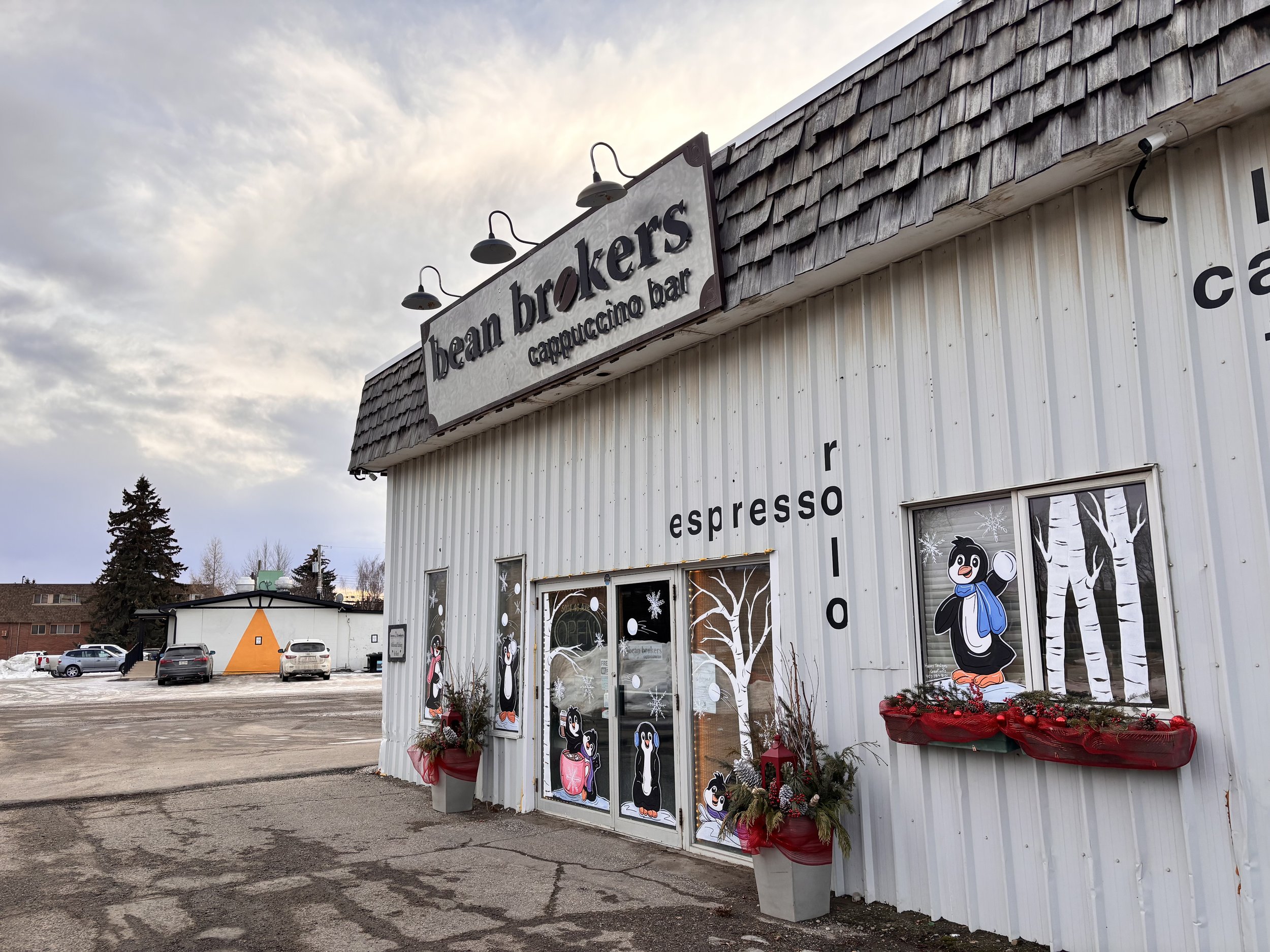
From there, we headed to Bean Brokers, a sweet local coffee shop, to hold our monthly full-team meeting. Tucked into a corner sharing a set of earphones, we tried (with mixed success) to contain our enthusiasm of meeting with our full team for the first time. When the founding team plans things together, momentum builds fast, often faster than we can keep up with. So we are so thankful to have a team generous enough to help turn our energy into action.
But planning is only half the work, listening is the other half. With some time to spare, we decided to see who would be open to chatting. As a few groups of young women filtered into the café, we introduced ourselves and shared a bit about the project and the youth event we were hosting that evening. Their response was immediately encouraging. They shared our view that there is something special about having places to gather, learn, and talk about what is happening in our communities.
Their comments remind us of why we’d come to Olds in the first place, before we had officially started our day of meetings: places like this are where civic life actually lives, in everyday conversations. These interactions carried us into our next meeting with renewed energy and confidence.
Councillor Chad Taylor and the Work of Local Democracy
Next, we met Chad Taylor; a small-business owner, handyman, and town councillor in Olds. If our goal for the weekend was to understand how national-scale conversations land in small-town life, sitting down with Councillor Taylor turned out to be exactly the right place to start.
He and his wife moved to Olds after some time in big cities in search of something potentially familiar to some small-town residents; a return to the kind of small-town life they had both grown up in. A self-described introvert, he didn’t initially strike us as someone who would chase public office. So we asked what prompted him to run for council; he told us that he simply wanted to do what he could to help his community.
That desire to be useful, to serve in practical, tangible ways, seems to define how he approaches the role. On any given week, that might mean meeting one-on-one with residents skeptical about a new water-meter program, answering impromptu questions in the grocery store about the proposed data centre, or simply helping neighbours better understand how municipal decisions are made. The through-line in all of it was accessibility; he wants residents to feel heard, and to feel like local government isn’t something happening to them, but something they’re part of.
What we learnt however, is that this accessibility comes at a cost. Although technically a part-time position, Councillor Taylor described the role of town councillor as feeling much closer to full-time. Like many municipal representatives, he balances council responsibilities alongside running a business and managing the ordinary demands of life. The emotional labour of being constantly available, of fielding concerns, frustrations, and questions (often for issues partly are entirely outside the control of municipal representatives), is real. Talking to Councillor Taylor reminded us that being an effective representative requires time, patience, and a willingness to be visible, even when conversations are difficult and reality is much more complicated than it may seem. We left with plans to raise awareness of the demands on our local politicians.
And yet, even as he was describing these difficulties, Councillor Taylor's commitment was unmistakable. In a town trying to balance growth and big ambitions with small-town values and feel, representatives like Councillor Taylor are doing the steady, often unseen work of local democracy.
An Afternoon of Unexpected Conversations
After our conversation with Councillor Taylor, we decided to spend the rest of the afternoon simply exploring the town. We made our way down 50th Ave, popping into a thrift store, a tack and western wear shop, and past the local exhibition and festival grounds. At the library, we struck up a conversation with a staff member who lives in the near-by town of Didsbury. She decided to stay in her hometown after finishing her post-secondary education. Why? For many of the same reasons Councillor Taylor had described earlier: the pull of small-town life, the familiarity, and the deep relationships. Ironically, despite working in a role that often connects folks to resources, events, and other types of library programming that help build awareness of civic institutions within the community, she herself often felt outside of the conversation.
Later, we stopped at the local Legion, expecting to meet longtime Olds residents. Rather unexpectedly however, we met Arnold, a man from Québec who has spent more than a decade travelling back and forth across Canada with a singular mission: to commemorate deceased veterans. He told us stories from nine cross-country trips, of small meetings to garner support, and the quiet acts of perseverance. His lesson was simple and disarming: you don’t need a big university degree to understand the world and systems within it. You learn by meeting people, by listening, and by learning what it truly takes to commit yourself to something larger than you. In its own way, his mission echoed what we had been seeing all day; civic life isn’t always loud expressions of political will or organizational capacity. Often, it looks like a steady dedication to showing up,and remembering everyday why we do what we do. While chatting with someone like Arnold wasn’t our intention in being in Olds, hearing his story and the lessons he has learnt along the way was very much needed. Thank you Arnold for everything you have done and continue to do and for taking the time to share it all.
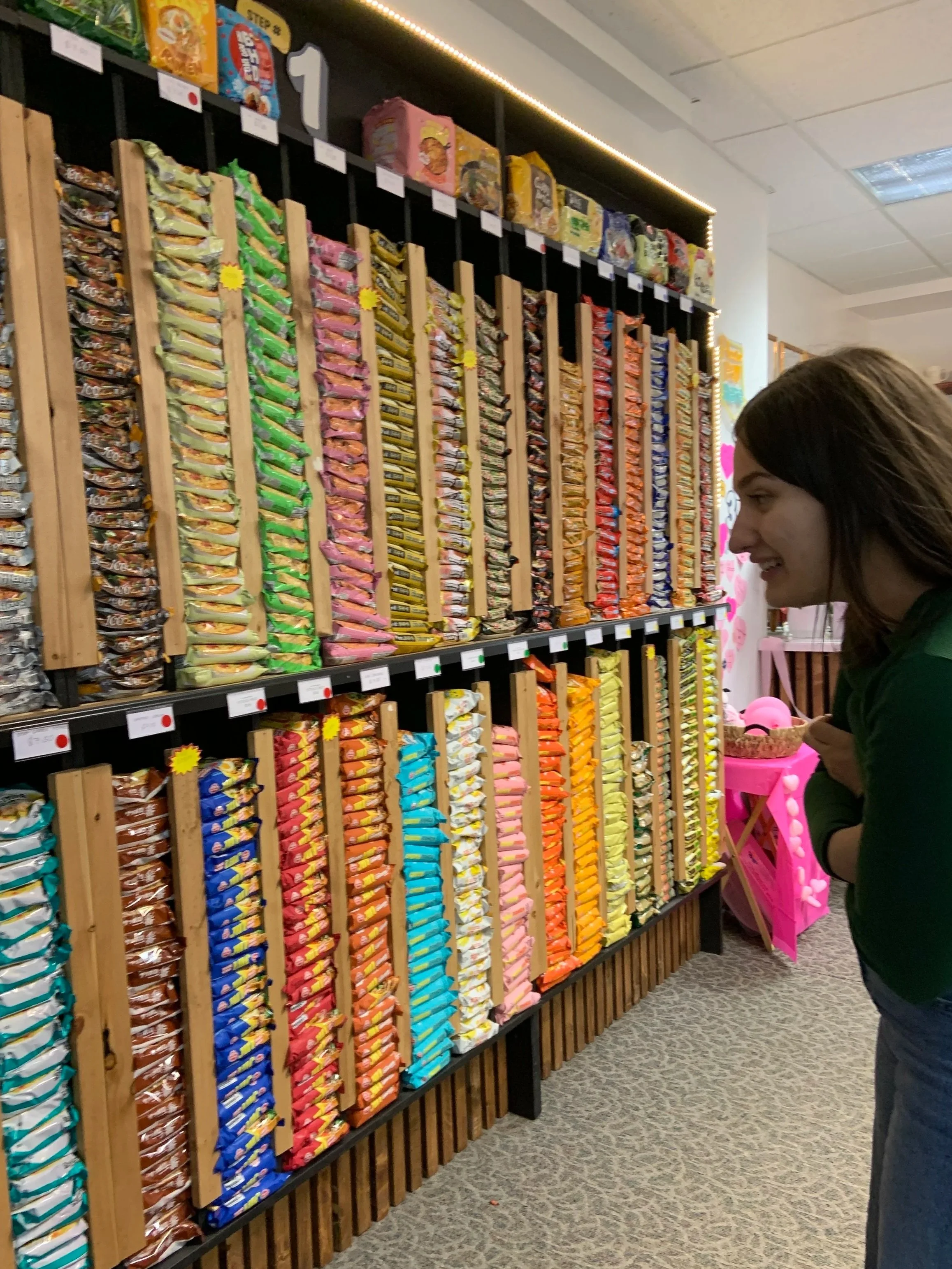
Our final stop was our youth event at the newly opened and wonderfully welcoming Ramen Library (huge shoutout to the owners and staff for being so accommodating! Here is Alex picture checking out one of two huge ramen walls they have!).
In collaboration with Apathy is Boring, a national non-profit that seeks to foster civic engagement in youth, we brought one of their most popular programs, Table Topics, to Olds. The goal was to create space for young people to talk about what’s top of mind in their community and what they wish to see in the future. While unfortunately many sign ups didn’t show, we had the pleasure of enjoying dinner with the Vice-President Academic of the Students’ Association of Olds College, Sukhpreet Singh.
Our conversation was lively and ranged widely: student politics, affordability, housing shortages, and the difficulty of engaging with students. With a tight rental market in Olds, Sukhpreet explained how some students are forced to double up on roommates or commute from neighbouring communities (as far as Airdrie, an hour away). While new apartments are going up in the town, he worries that unless larger scale development occurs, infrastructure and housing constraints are contributing to low retention of graduates. Students may love Olds, he told us, but many don’t see a viable path to staying after graduation.
He also spoke candidly about the challenge of engaging young people in decision-making, both on campus and in the broader community. Affordability pressures mean many students are working while completing their studies. Being already stretched thin, he was a bit pessimistic about the willingness of young people in the town to engage in civic participation, citing some of the apathy and resentment we have heard about in other parts of the province.
And yet, sitting across from him, we couldn’t feel hopeless. Sukhpreet’s own commitment to good policy, student advocacy, and thoughtful leadership was evidence that the story doesn't have to be one of apathy, it’s one of capacity. People like Sukhpreet exemplify that the desire to engage is there. The question is whether the proper support is available for people to meaningfully contribute while balancing the demands of being young today. Being at the start of our own careers, we understand the struggles that make civic engagement difficult at this age.
Closing thoughts and Future Plans
By the end of the day, a through-line had emerged. From the breakfast tables at Smitty’s, to the coffee shop, to the Legion hall, to a single student leader willing to spend his evening in conversation, civic life is relational. It is carried by people who choose to stay, to serve, and to speak up. Asking the big questions about data centres and development matters to civic life. But so do the quieter ones: Who has the time, space and capacity to participate meaningfully in democracy? How do we design spaces that invite people in rather than wear them out? And most importantly (and simply): How can we help people feel truly heard, and by extension, represented by our democratic institutions?
In just a handful of conversations in Olds, we were reminded that representation is both more complex and more straightforward than we often make it out to be. It is complex because it operates through systems, policies, and governance structures that may appear simple in theory or in classrooms, but in practice are anything but. We saw that complexity play out in real time: in the effort to balance growth with a small-town identity, to reconcile long-term planning with immediate community concerns or to ground decisions in data while still ensuring skeptics feel heard. When democracy becomes too distant, the gap between the process and perception of democratic representation widens. It is in that gap that apathy and resentment can take root, a dynamic we believe may be happening in Olds, but also across the province and beyond. These tensions and questions will be explored more fully in our upcoming report, and in the larger goal of the project as we continue to examine what meaningful representation looks like on the ground.
And yet, our time in Olds reminded us that representation can also be incredibly straightforward. It looks like a councillor answering questions in the grocery store. A librarian creating space for neighbours to cross paths. A student leader staying late to talk about what isn’t working. At its core, it is about whether people feel seen, heard, and reflected in the decisions that shape their lives. Our town halls this summer will be built around that simplicity. They won’t be about jurisdiction or abstract theory, they’ll be about sharing our mission and talking candidly about democracy, leadership, and what everyday people need in order to feel their perspectives count.
We can’t wait for what spring and summer will bring!
Our New Look!
And, fittingly, as this next stage of work takes shape, so does our visual identity.
We wanted it to capture the way small-town and rural life feels: simple, grounded, and approachable. One of my fondest memories of the Alberta prairies is watching fields of wheat blur past a car window, or pulling over during road trips and horse shows just to pat the nose of a curious cow leaning over a fence. Those images, prairie fields, livestock, open sky, are not abstractions. They’re the texture of the Alberta prairies we love too much. To represent our work through those symbols means something deeply personal. It reminds us that while conversations about democracy can feel lofty, they are always rooted somewhere real, in towns like Olds, in relationships, and in the everyday lives of people who care about where they live.
Big shoutout to Madelaine Mae Dack for designing and illustrating our logo and sticking with us as we figured out what we even wanted in the first place!
